
@golodniyTemshik8 486 subscribers
ГОЛОДНЫЙ ТЕМЩИК
LevelIntermediate
LanguageRussian
Risk levelHigh Risk
PrivacyPublic
TypeChannel
Единственный канал который нужен тебе для ворка.
Владелец: @boom4ikss
Главные манагеры канала: @tocatcrypto + @killhpx
Другие манаги: @bekmesha + @S0ni_k + @garant_ADS + @blitz_777 + @admphantom и @dimasykk07
Market Filter
Market Filter Rating
5/10Average
Difficulty
Intermediate
Risk level
High Risk
Category
Web3
Content Type
Guides / Education
Telegram
TypeChannel
Subscribers8 486
LanguageRussian
PrivacyPublic
Strength
The channel regularly posts about new projects in their early stages, providing access to potentially lucrative airdrops. The simple structure of the posts makes it easy to get started right away without any prior preparation.
Weakness
A high proportion of affiliate integrations and guest posts undermines trust in the content. Promoting questionable schemes and services increases risks for users
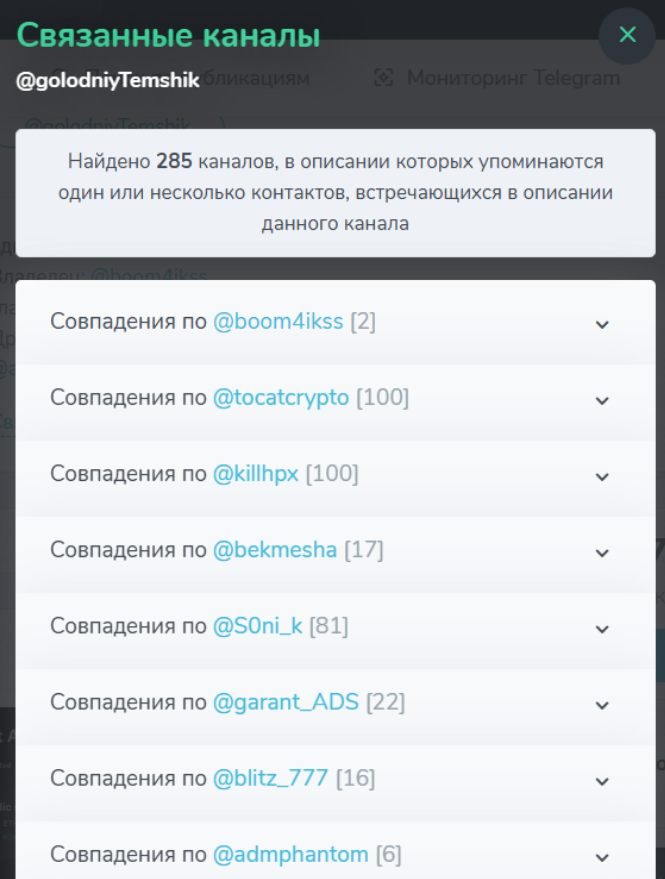
Example 1.Скрин указывается на участие в рекламной или арбитражной сетке.
Our Methodology
Learn more about our methodology We check channels against an internal checklist of 44 parameters: we analyze audience dynamics, content quality and nature, authorship transparency, promotion methods, and signs of potential risk. The final score is based on the combination of criteria and reflects the channel's overall reliability and quality.
Posted on Market Filter:6/20/2026
Last Updated:6/20/2026
HUNGRY TEMSHIK (@golodniyTemshik) — a Telegram channel focused on airdrops, testnets, and quick ways to make money in Web3. The main content consists of step-by-step instructions on how to participate in activities (farming points, completing quests, and obtaining NFTs). The channel actively uses affiliate integrations and referral mechanisms. Key risks include aggressive monetization, an inconsistent posting history, and the promotion of questionable schemes. The content is useful for finding early-stage activities but requires critical evaluation. Content and Format The content is built around short instructions on how to participate in Web3 activities. “Activities” refer to user actions within project ecosystems: connecting a wallet, completing tasks, participating in testnets, and farming points (accumulating internal points that can potentially be converted into tokens). Posts are published irregularly, averaging up to 10 posts per month, and the structure is almost always the same: a brief description of the project, information on investments, and a list of steps. The channel emphasizes early-stage projects—it regularly mentions fund investments and low competition, which are used as arguments for getting involved. The content has low uniqueness, as most activities are duplicated on other channels. The approach is geared toward quick results, without in-depth analysis of projects or risks. The content includes various types of materials: instructions for farming airdrops and testnets (completing tasks for future rewards) recommendations for participating in NFT activities and staking (earning tokens or NFTs) service integrations, including proxies and third-party platforms rare posts sharing personal experiences or results advertisements for third-party services and casinos Important! Most posts lack an analysis of the tokenomics, the team, or the project’s actual value, which lowers the quality of activity selection. Monetization and Business Model The primary monetization model is based on referral links and affiliate integrations. Virtually every post includes recommendations to use specific services—most often proxies—which indicates systematic work with affiliate programs. A separate area of focus is advertising third-party projects—ranging from Web3 startups to gambling platforms. For example, services offering bonuses for deposits or activity are promoted, which creates a direct financial incentive for the author. A pinned post promoting the LuckyExchange exchange demonstrates an additional level of monetization—through services without KYC/AML requirements that offer “crypto laundering” and anonymous transactions. This goes beyond standard Web3 content and points to an expanded revenue model. Key point: Recommendations are often presented as personal experiences, but are in fact integrated into an affiliate model, where the author benefits from the audience’s actions. Reputation, Risks, and Characteristics The channel shows signs of inorganic growth—a sharp jump from 300 to 8,000 subscribers in 2 days, as well as subsequent spikes and drops in audience numbers. This suggests possible fake growth or purchased traffic. An additional risk factor is the large number of deleted posts, including: money-making schemes outside the crypto space (e.g., via OnlyFans) promotion of high-risk projects with signs of being pyramid schemes promises of algorithms with high market prediction accuracy The channel lacks a transparent external ecosystem but is linked to a network of 285 channels through shared contacts, suggesting participation in an advertising or arbitrage network. Comments are open, but audience activity is low, which undermines confidence in engagement. Conclusion The channel serves as an aggregator of airdrop activities and may be useful for finding early opportunities in Web3. However, the quality of project selection and the transparency of monetization remain average.